Fusor - 3D Print Studio
A pre-launch store that makes precision manufacturing feel clear, visual, and human.
Client
Fusor
Role
Product Designer
TIMELINE
4 Weeks
PLATFORM
Responsive Web
Scope
UX Research, Prototyping, Copywriting, UI, Design system, Branding
Context & Problem
FUSOR is a Seattle 3D-printing startup offering high-precision, on-demand manufacturing. It entered the market with no digital presence and a complex offering that could intimidate non-engineers.
The challenge: convey engineering precision while staying accessible, visual, and relatable for creative users.
Outcome
Project Overview
Improved sustainable solution discovery efficiency by 40%
Reduced sustainability decision-making time by 30%
Achieved an 80% task success rate in usability testing
Adjusted a design system with over 30 components for ongoing feature development
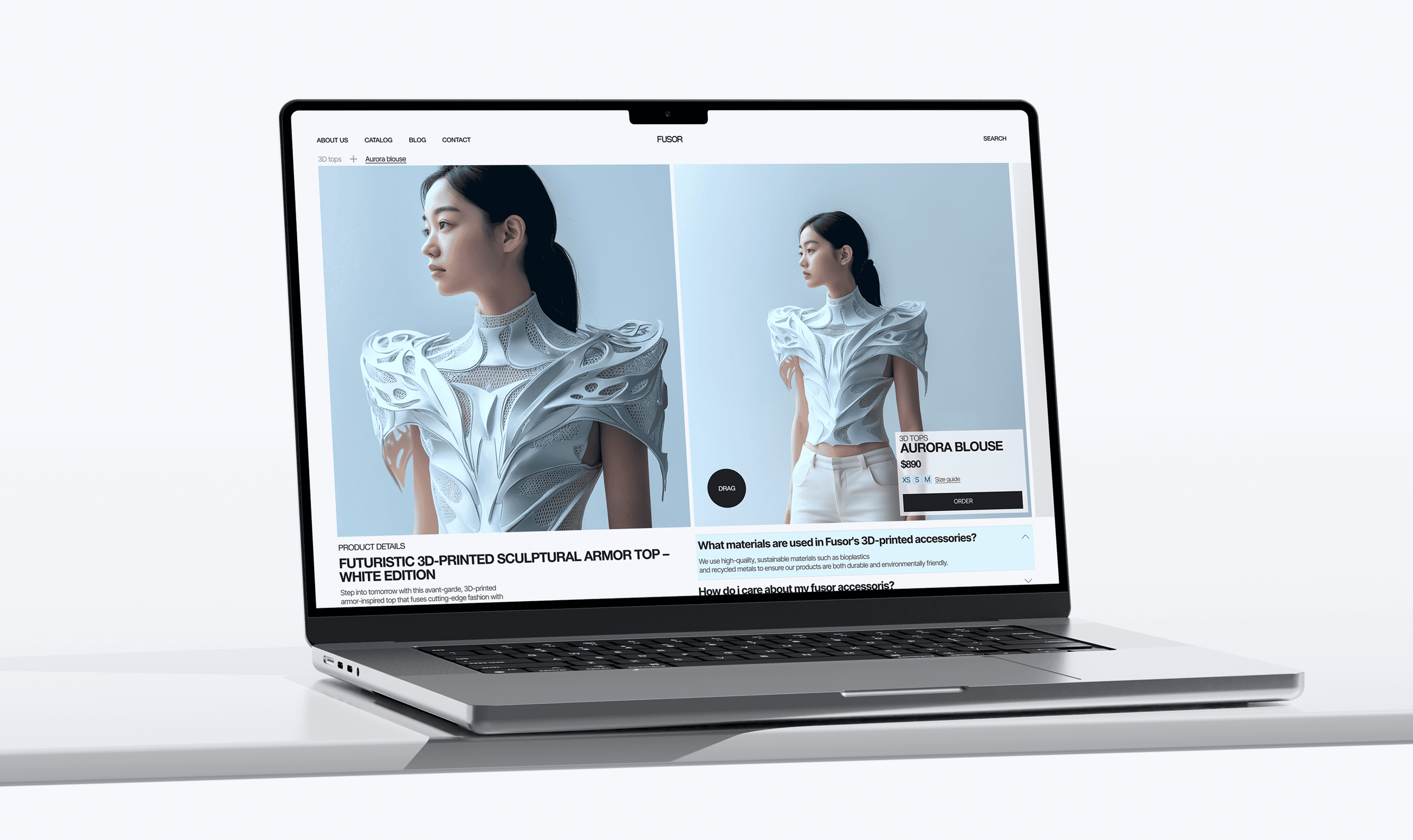
FUSOR is a fast-growing 3D printing startup based in Seattle, USA. The company provides high-precision, on-demand manufacturing for individuals, small businesses, and early-stage startups. Their goal is to make custom production accessible, flexible, and fast — without the overhead of traditional manufacturing.
As the sole product designer on this project, I was responsible for turning an early-stage business idea into a clear, scalable digital presence — one that communicates FUSOR’s value and positions the brand as both innovative and trustworthy.
UX Research
Client Brief Highlights
offering — custom 3D printing, modeling, post-processing;
audience — costume and creative designers, individuals ordering custom objects for events;
pains — slow production, limited customization, expensive tooling;
desired perception — innovative, modern, reliable, fast.
Competitive Benchmarking
5 direct competitors (Slant3D, Moonshot3D, Seattle 3D Printing, Smart Tech 3DP, Metrix Create: Space) across 38 UX/UI and business criteria.
Key insight
competitors were either too technical (alienating non-engineers) or too craft-focused (lacking scale).
Opportunity:
sit at the intersection of high-tech precision and human-centered accessibility.
Design process
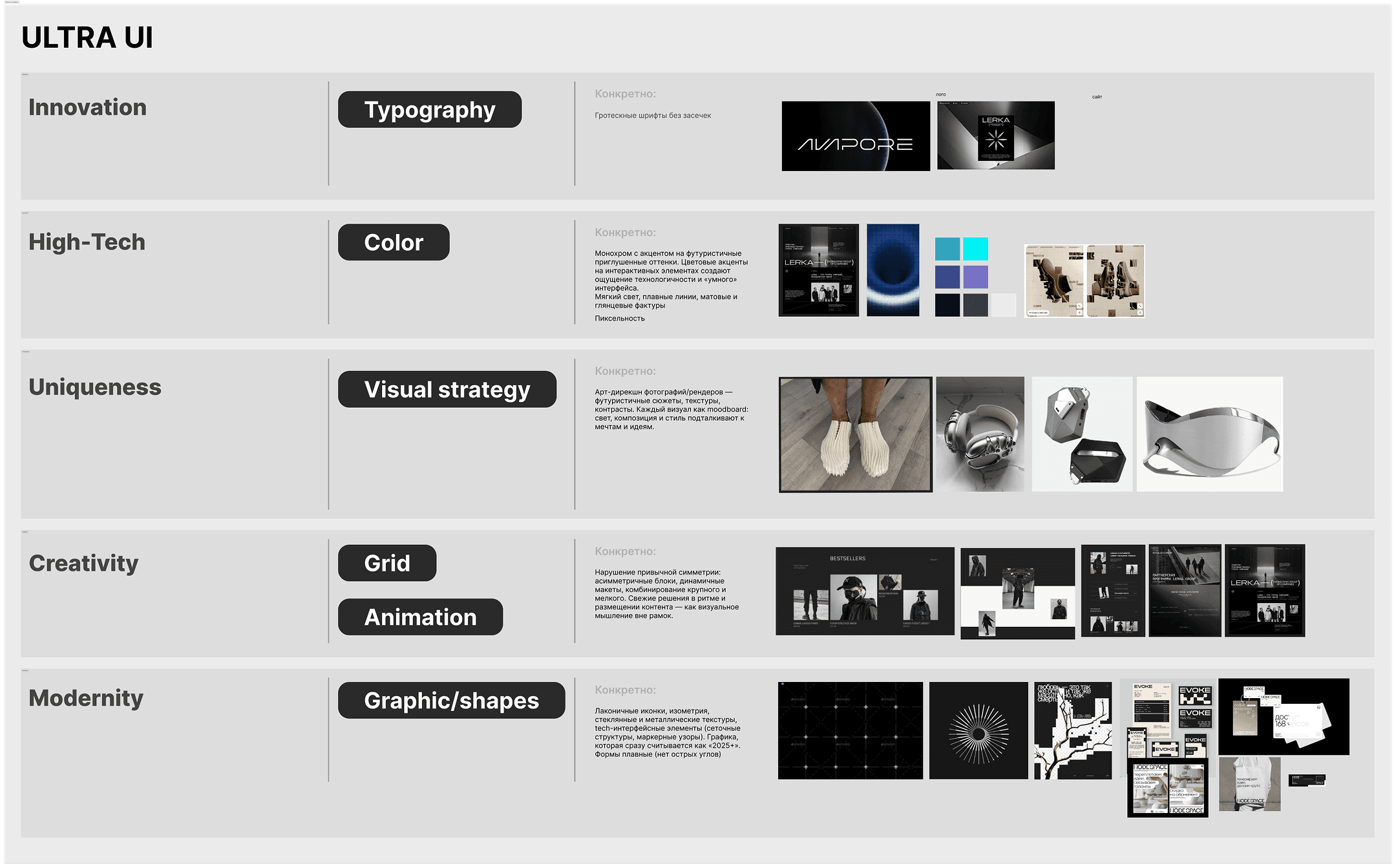
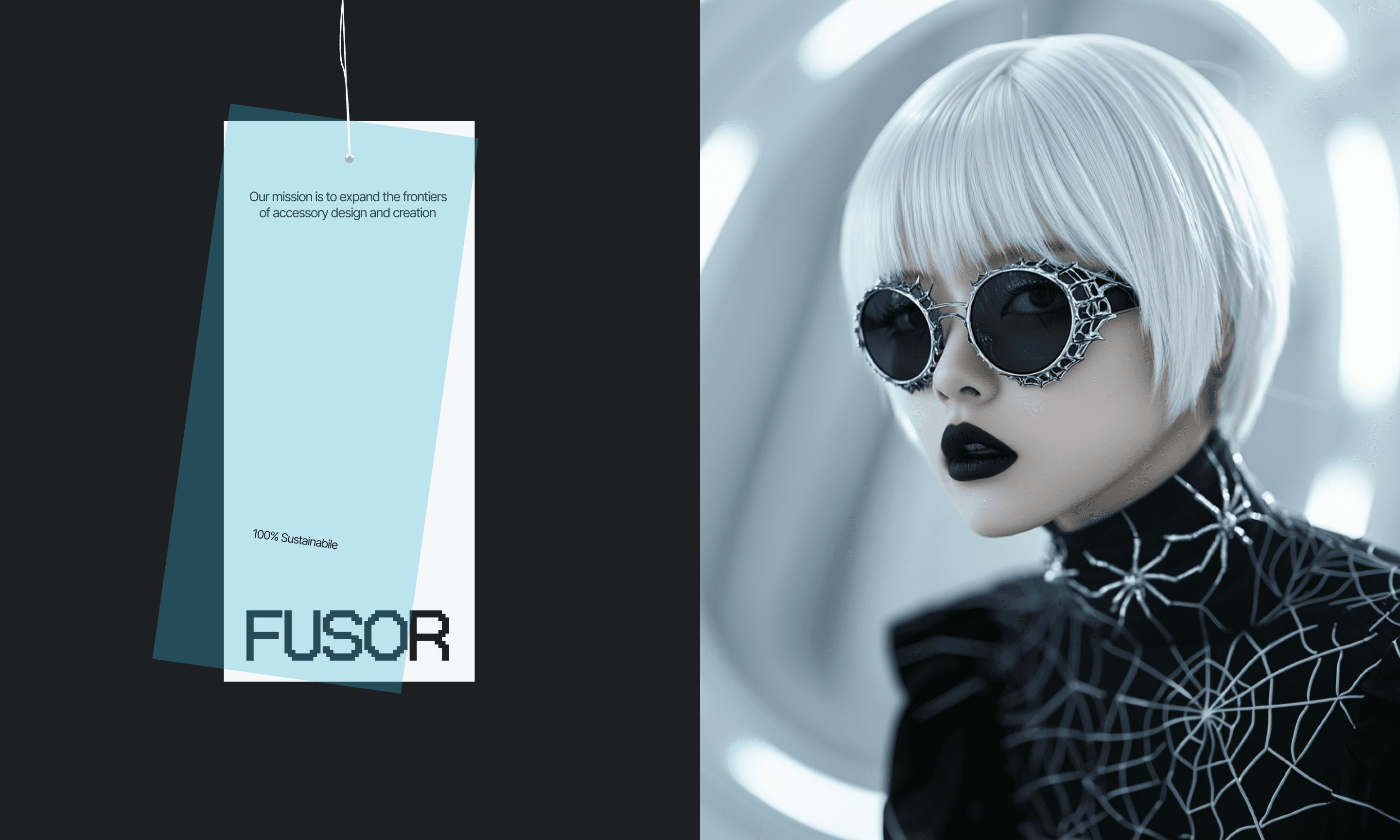
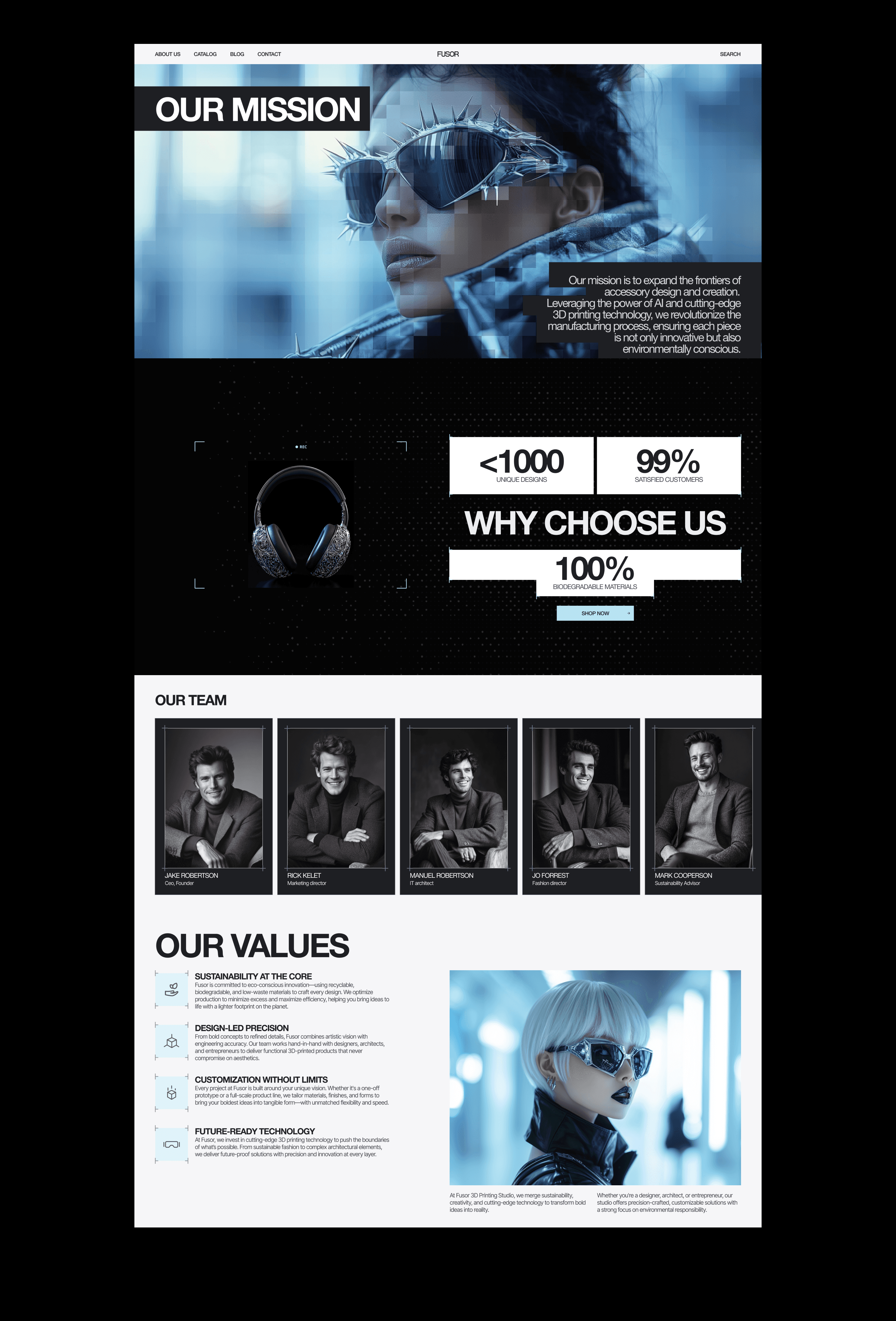
Translated brand keywords (Innovation · High-Tech · Uniqueness · Creativity · Modernity) into the visual direction — clean, minimal, futuristic.
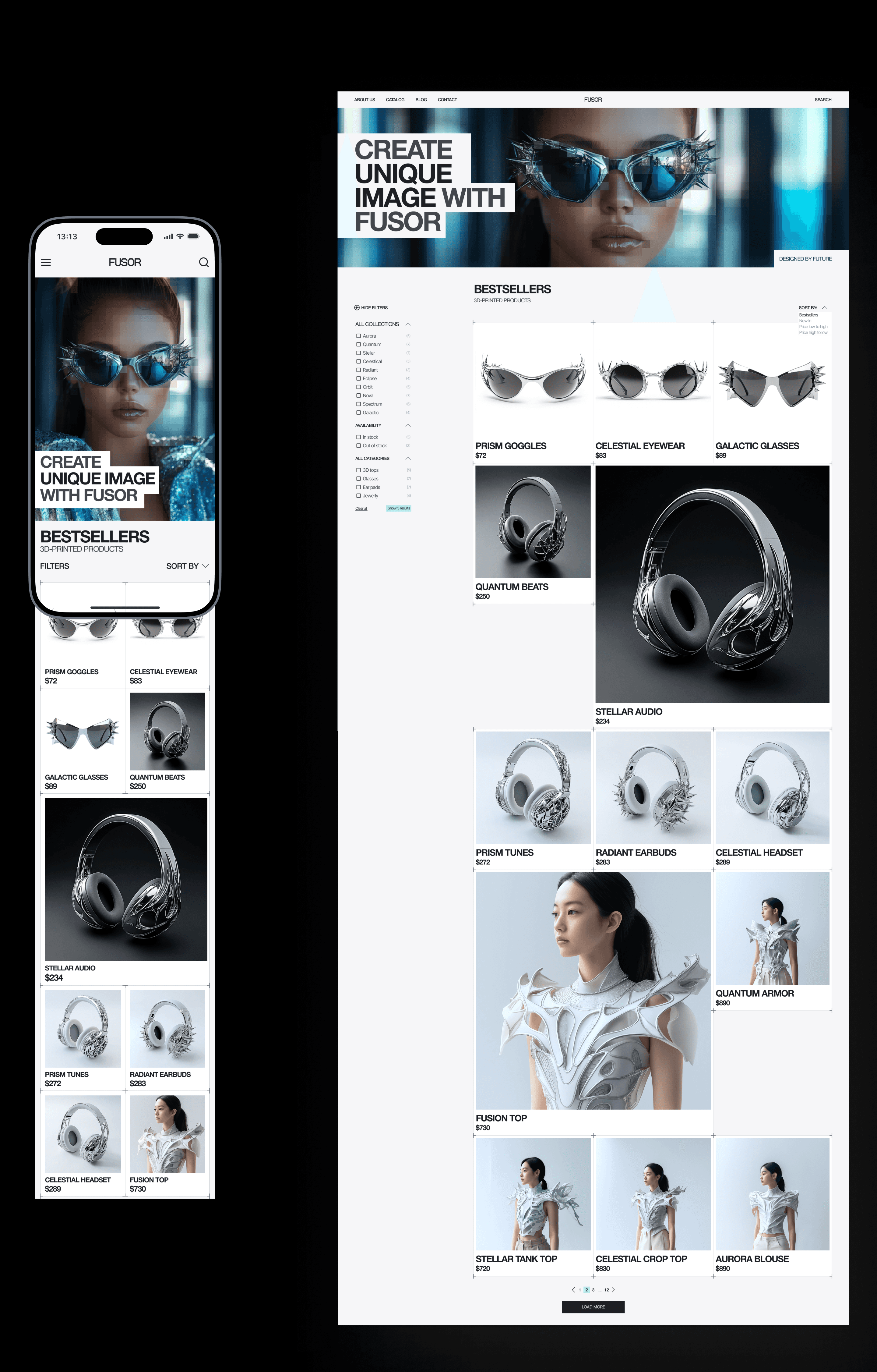
Built the site around 5 key pages; wrote all site copy.
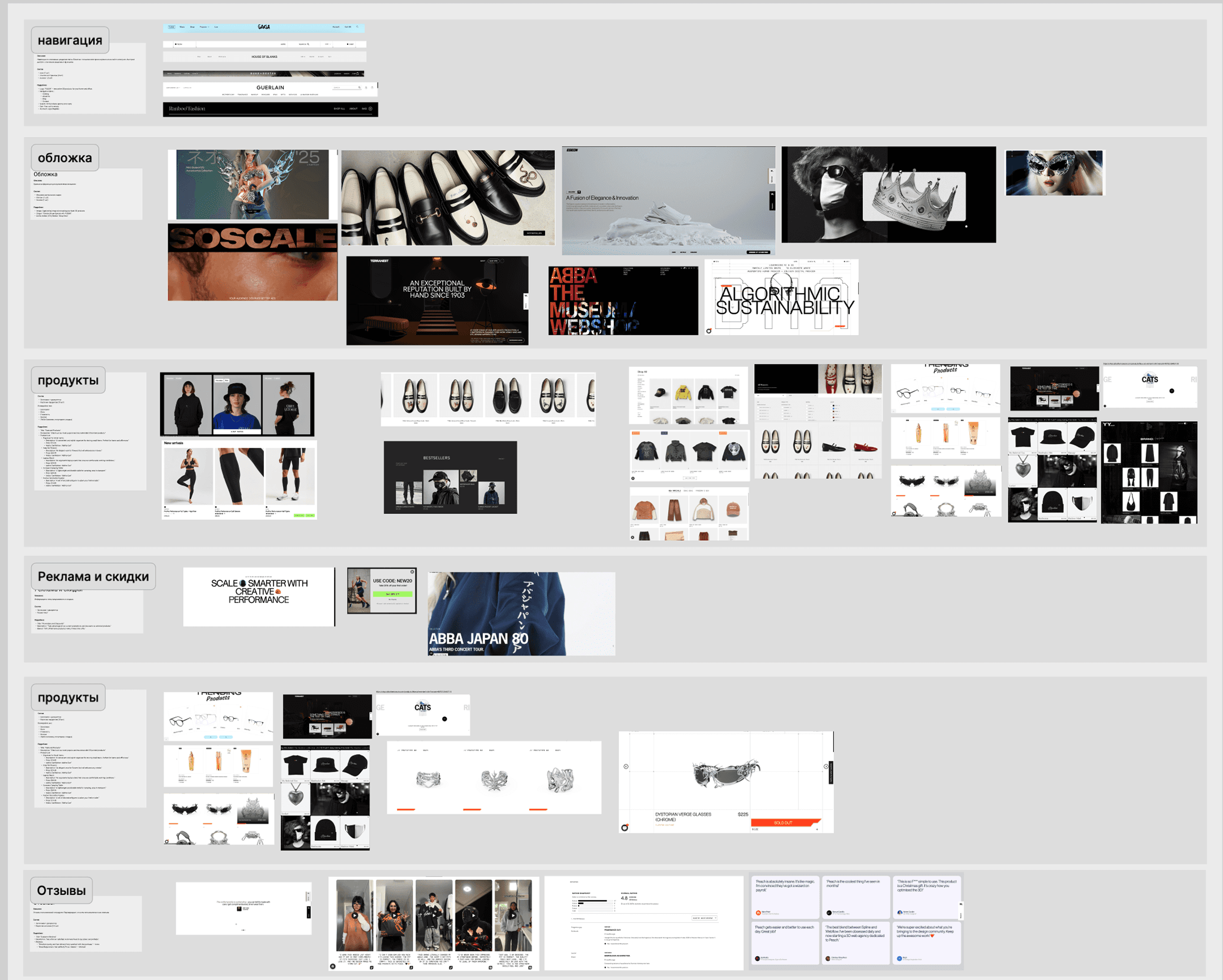
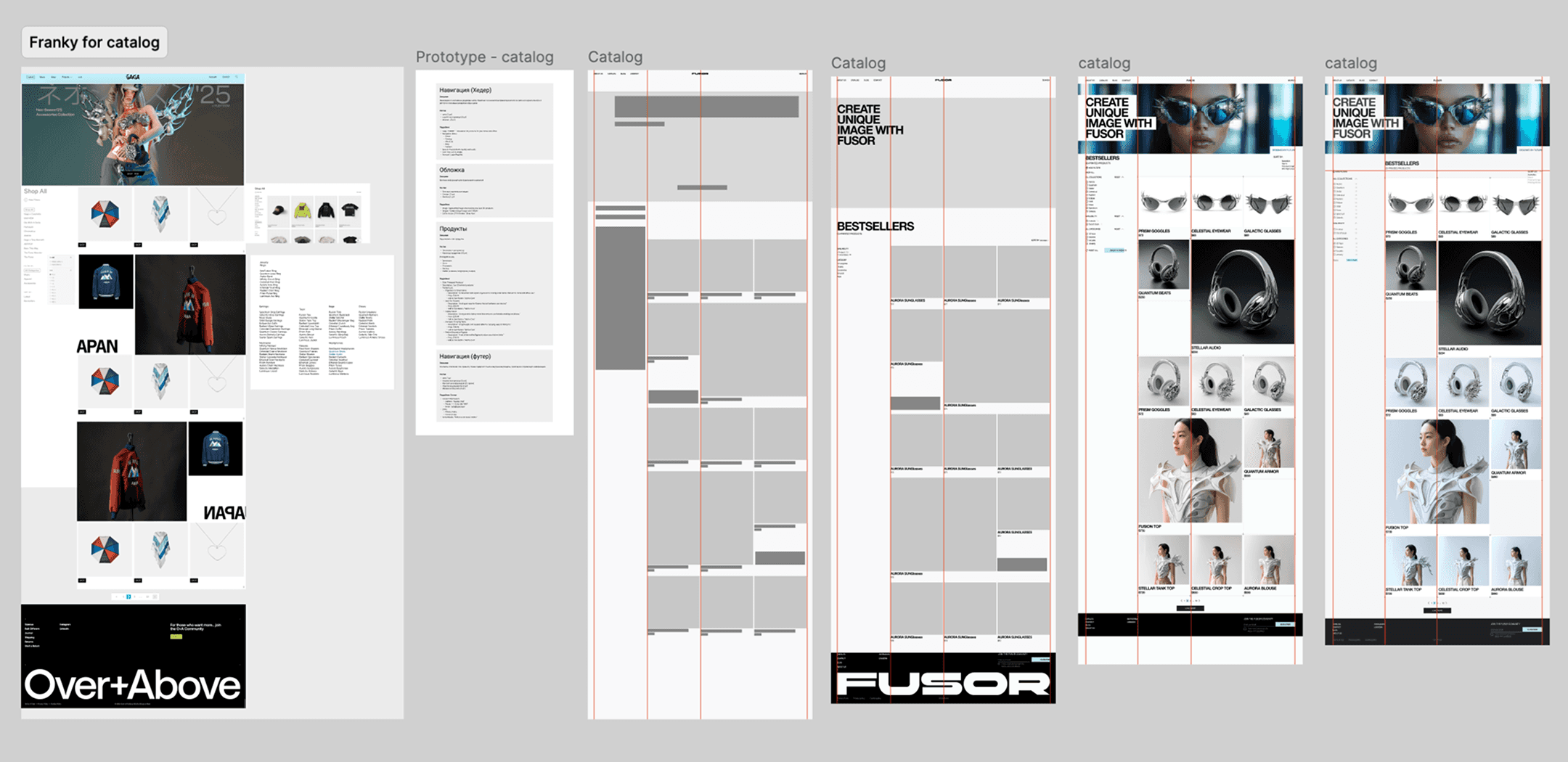
"Franky" references → wireframes → hi-fi prototype; delivered a UI kit for responsive design.


Outcome
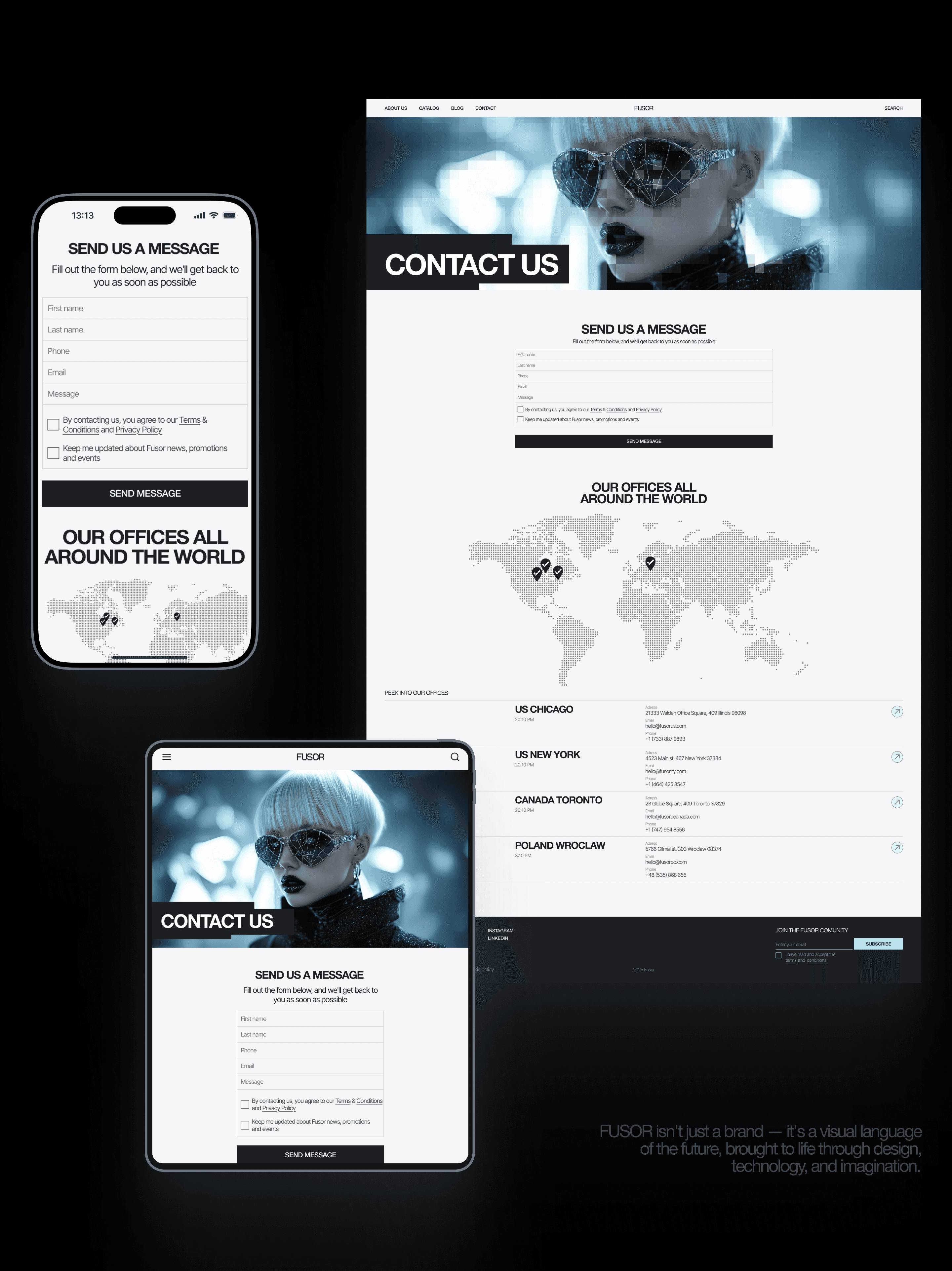
Delivered a 5-page responsive website, advanced product catalog, and scalable UI system
Benchmarked 5 competitors across 38 UX criteria
Introduced AI-generated product imagery, replacing early production photos
Takeaway
Designing for deep-tech doesn't mean making things look complex. The real job is translating precision and innovation into experiences that feel clear, visual, and human.
Problem
Design Challenge
Sustainability managers struggled to find affordable, trustworthy ESG solutions due to the lack of a centralized and accessible platform.
How might we help sustainability managers quickly discover and compare ESG solutions to reduce their company’s environmental footprint?
Our challenge was to design a climate tech marketplace MVP under limited time, budget, and research resources – while ensuring it was usable, scalable, and genuinely helpful for decision-makers.
FUSOR was entering the market with no digital presence. The main design challenge was to:
“Create a website that conveys innovation and engineering precision while staying accessible and relatable to everyday creators.”
UX Research
Stakeholder & Expert Interviews
Client Brief Highlights
Conducted 5 in-depth interviews with sustainability managers across mid-size and enterprise companies in finance, manufacturing, and retail.
Core offering: Custom 3D printing, modeling, and post-processing
Core offering: Custom 3D printing, modeling, and post-processing
Spoke with 2 ESG consultants to understand industry pain points and decision-making workflows.
Target audience: Makers, RV and boat owners, engineers, designers
Target audience: Makers, RV and boat owners, engineers, designers
Decision-makers spent 10–15 hours per week manually searching for ESG vendors, relying on fragmented information from industry reports, networking, and cold outreach.
Pain points: Slow production, lack of customization, expensive tooling
Pain points: Slow production, lack of customization, expensive tooling
Pain points: Slow production, lack of customization, expensive tooling
Desired perception: Innovative, modern, reliable, and fast
Desired perception: Innovative, modern, reliable, and fast
Competitive Benchmarking
Reviewed 8 existing ESG-related platforms and climate tech directories.
I analyzed 5 direct competitors — Slant3D, Moonshot3D, Seattle 3D Printing, Smart Tech 3DP, and Metrix Create: Space — using 38 UX/UI and business criteria, including:
Evaluated navigation, search functionality, data transparency, and pricing clarity.
Homepage clarity and storytelling
Homepage clarity and storytelling
Navigation depth and conversion flow
Homepage clarity and storytelling
Visual hierarchy and product imagery
Homepage clarity and storytelling
CTA consistency and positioning
Homepage clarity and storytelling
Pricing transparency and service explanation
Homepage clarity and storytelling
Brand tone and trust signals
Key insight
None offered apples-to-apples comparison tools, and many lacked transparency around vendor credentials or certifications.
Most competitors either looked too technical (alienating non-engineers) or too craft-focused (lacking a sense of innovation).
FUSOR’s opportunity: Blend precision with accessibility — high tech with human touch.
User Surveys
Informational Architecture
Distributed a 10-question survey to a network of sustainability professionals via LinkedIn
I built the site structure around 5 key pages to ensure clarity and easy navigation. I crafted all website texts to reflect FUSOR’s tone — clear, professional, and engineering-driven.
I built the site structure around 5 key pages to ensure clarity and easy navigation. I crafted all website texts to reflect FUSOR’s tone — clear, professional, and engineering-driven.
Strategy
Design process
Simply listing ESG vendors wouldn't be enough. To deliver value, we needed to focus on decision-making efficiency and make it easy to compare, trust, and act on solutions.
Through research, we found that users:
Wanted clear ROI and budget estimates
Struggled to compare solutions side-by-side
So we positioned the product to help managers make faster, smarter, and lower-risk sustainability investments — not just browse vendors.
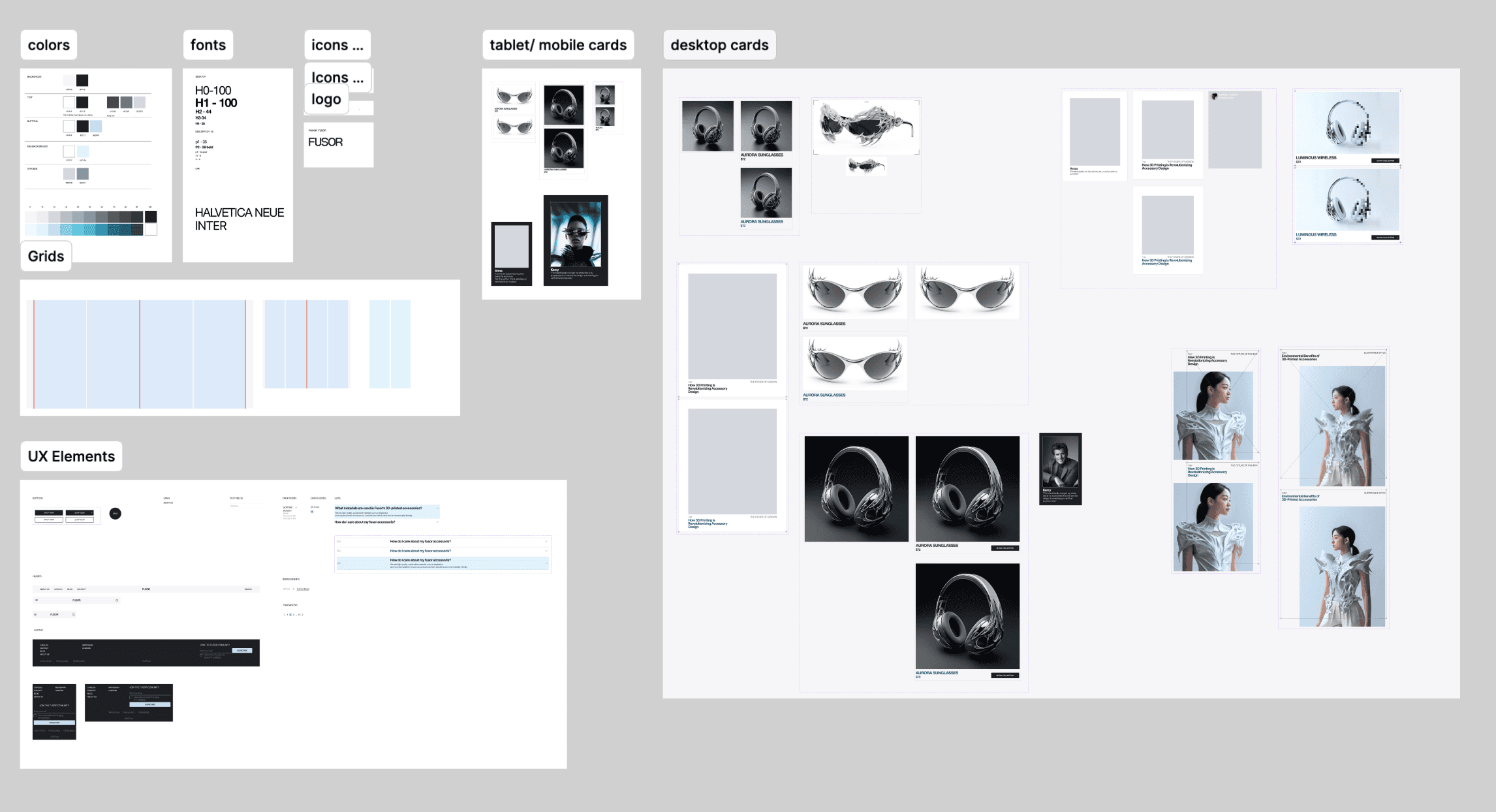
Before defining the visual direction, I translated brand keywords into emotional attributes:Innovation – High-Tech – Uniqueness – Creativity – Modernity.
These guided both the color palette and UI style — clean, minimal, and futuristic with strong typographic contrast and light 3D accents.
I collected dozens of website references within the tech and manufacturing sectors and created the "Franky" webpages.
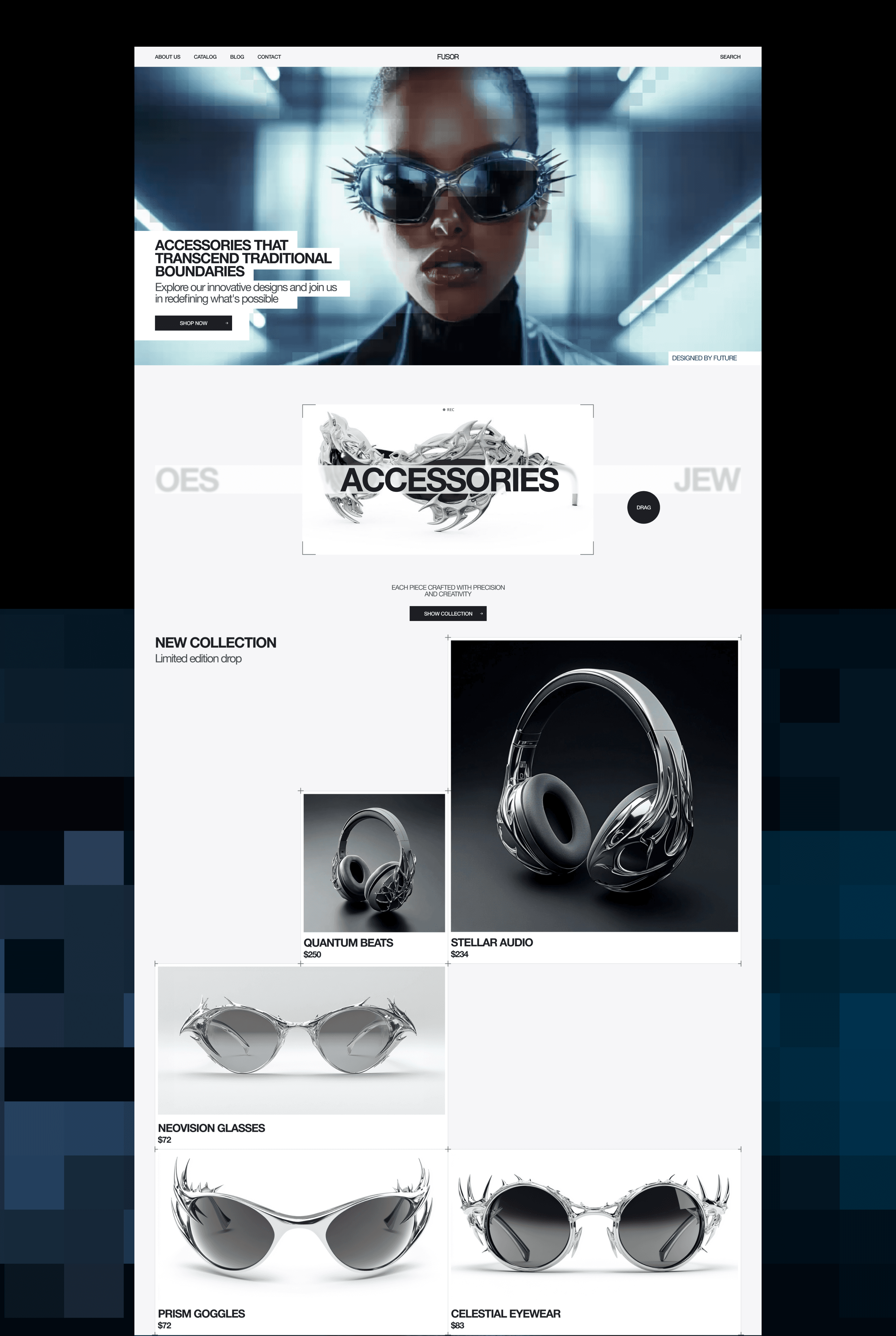
"The Franky" layouts evolved into structured wireframes and then into a high-fidelity prototype reflecting FUSOR’s identity — bold typography, geometric layouts, and modular 3D imagery.
Developed a UI kit for a responsive design.
Solution
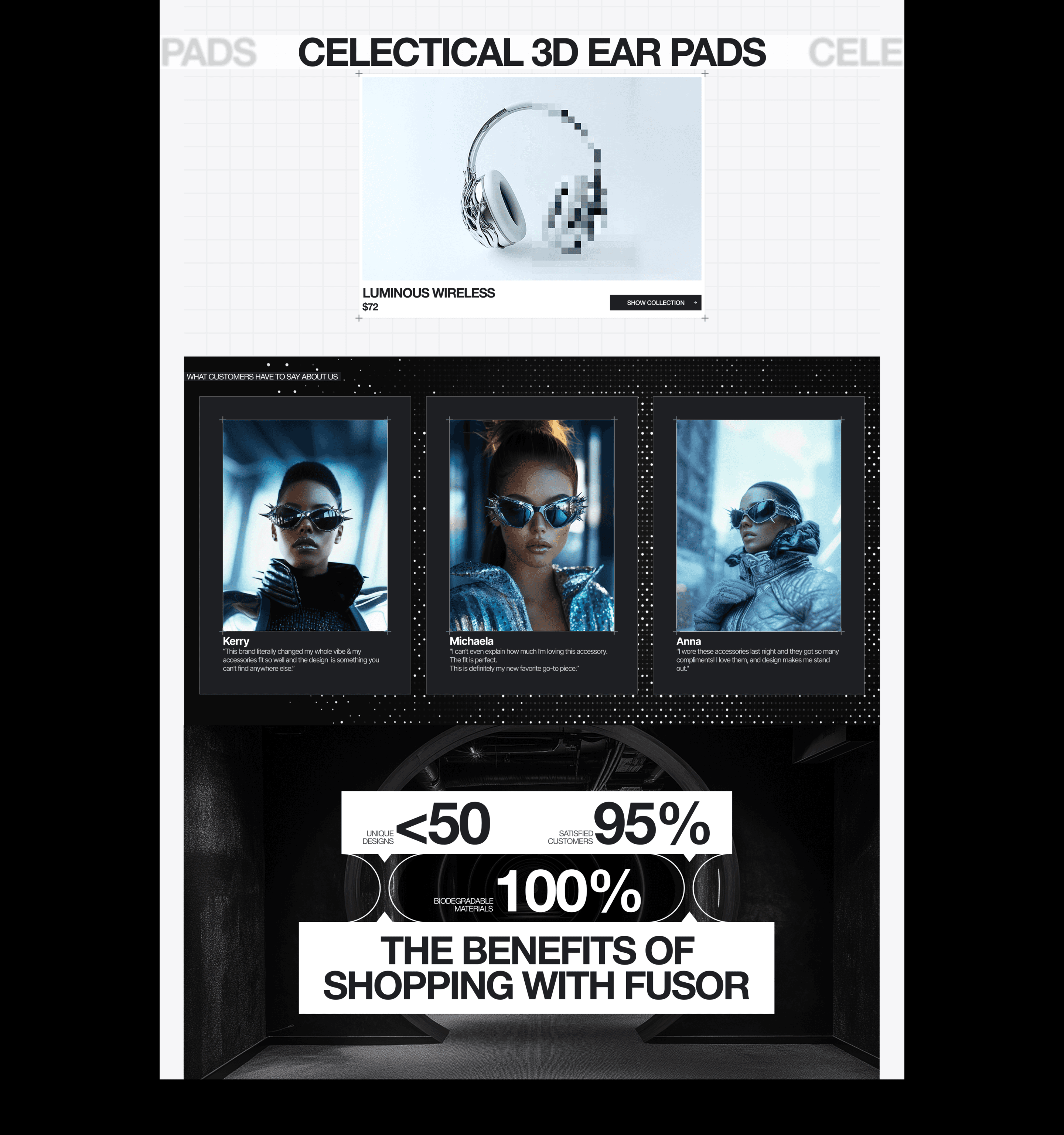
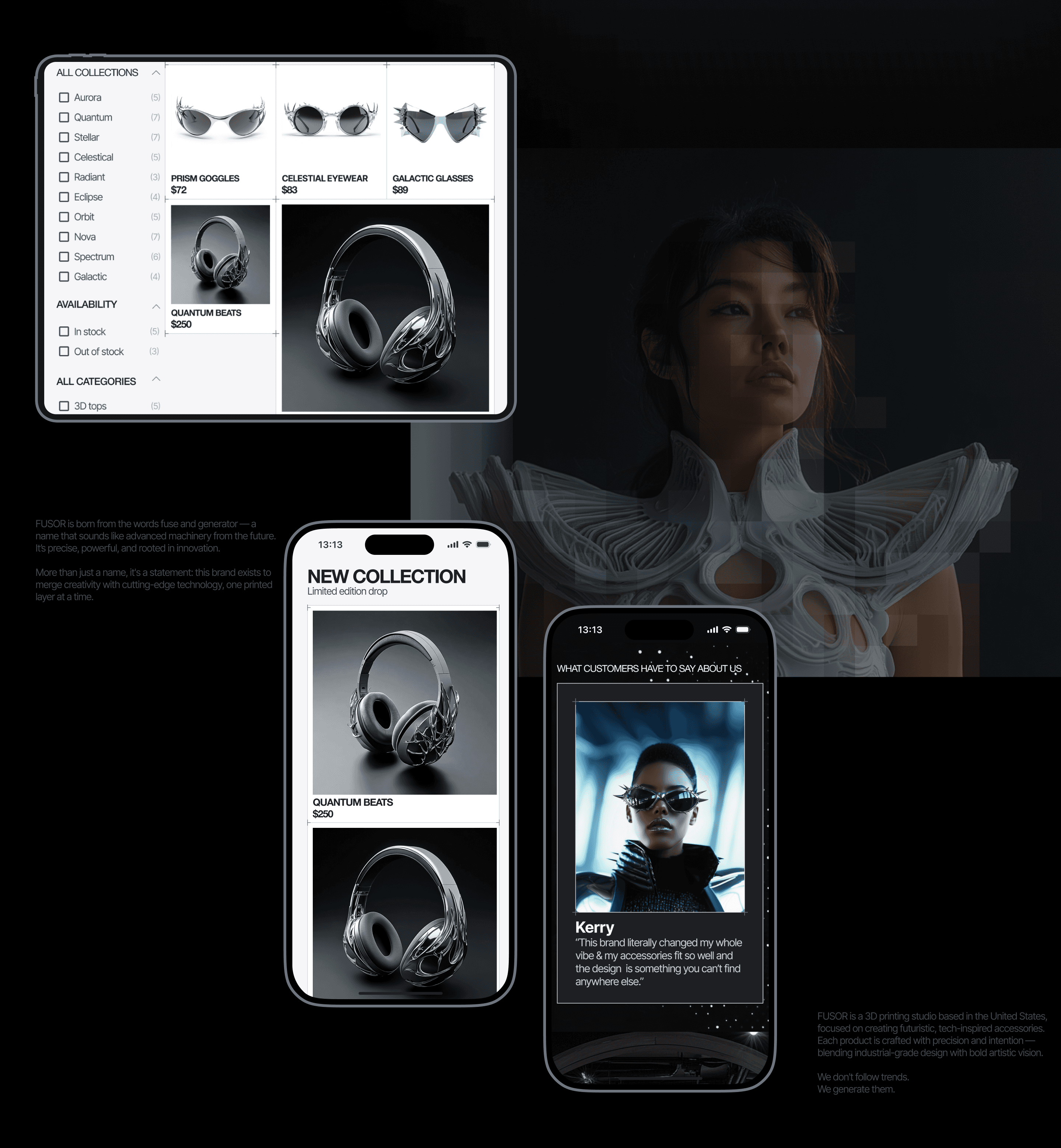
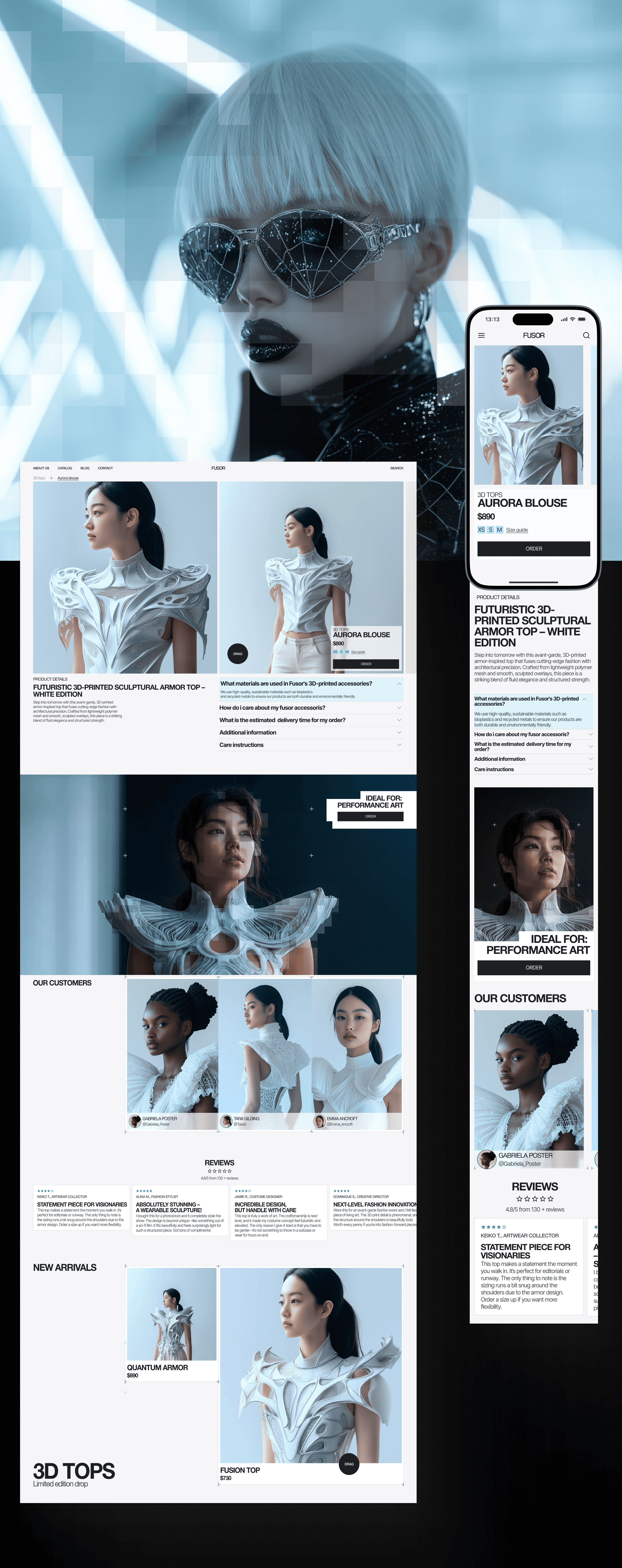
The final solution combined structure, usability, and brand identity into one cohesive digital product. I developed a high-fidelity prototype showcasing the full visual system — typography, 3D imagery, and geometric layouts that reflect FUSOR’s precision and innovation.
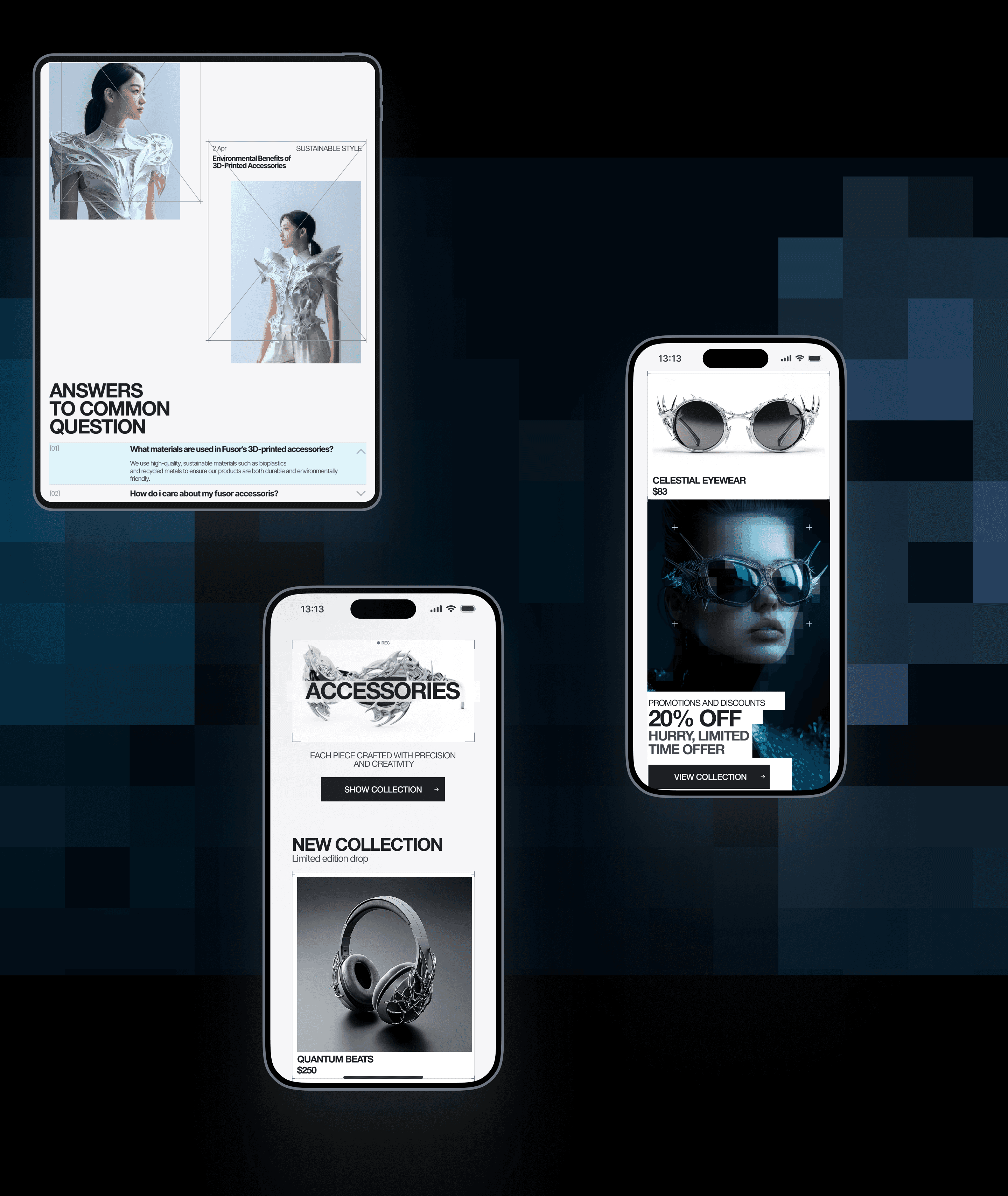
The design was built responsively for desktop, tablet, and mobile, with flexible components ensuring consistency across breakpoints.
To support scalability, I created a compact UI kit to hand off.
My Role
Impact & Outcome
Solution
As a UX/UI Designer, I led design across all stages of the UX process:
Conducted 8 user interviews and 10 surveys with sustainability professionals
Created customer journey maps, user flows, and site architecture
Designed responsive lo-fi and hi-fi prototypes in Figma
Adjusted a based design system with over 30 components
Conducted usability testing, synthesized findings, and iterated quickly
Partnered with the developer for smooth handoff and implementation

The final solution combined structure, usability, and brand identity into one cohesive digital product. I developed a high-fidelity prototype showcasing the full visual system — typography, 3D imagery, and geometric layouts that reflect FUSOR’s precision and innovation.
The design was built responsively for desktop, tablet, and mobile, with flexible components ensuring consistency across breakpoints.
To support scalability, I created a compact UI kit to hand off.
Led end-to-end UX, e-commerce, and visual design for a pre-launch 3D printing startup, delivering a 5-page responsive website, advanced product catalog, and scalable UI system informed by analysis of 5 competitors across 38 UX criteria. Introduced AI-generated product imagery, saving the company tens of thousands of dollars in early production costs and accelerating launch readiness.
Key Takeaways
Impact & Outcome
Designing for deep-tech products doesn’t mean making things look complex.
The real challenge is translating precision and innovation into experiences that feel clear, visual, and human — especially at an early startup stage.
Delivered a full brand-ready web experience for a pre-launch startup
Led end-to-end UX, e-commerce, and visual design for a pre-launch 3D printing startup, delivering a 5-page responsive website, advanced product catalog, and scalable UI system informed by analysis of 5 competitors across 38 UX criteria. Introduced AI-generated product imagery, saving the company tens of thousands of dollars in early production costs and accelerating launch readiness.
Established visual and verbal consistency across pages
Created scalable UI components to support future e-commerce integration
Positioned FUSOR as an innovative yet approachable brand
Key Takeaways
Designing for deep-tech products doesn’t mean making things look complex.
The real challenge is translating precision and innovation into experiences that feel clear, visual, and human — especially at an early startup stage.